The FLAMIN Fellowship 2026-2027
The FLAMIN Fellowship
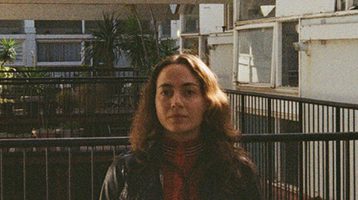
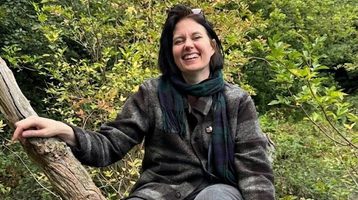
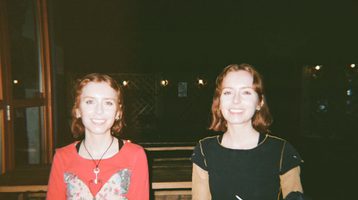
Stills from FLAMIN Fellows' work: (top left to bottom right) Ela Kazdal, Cáit McClay and Éiméar McClay, Raza Tariq, Rhona Eve Clews, Viviana Almas, Vasilisa Petrova
Providing early-career moving image artists with mentoring, funding and support to develop a new moving image work, the FLAMIN Fellowship has proven increasingly important to the UK’s creative ecosystem. Each artist receives £2,500, along with bespoke training and workshops from industry insiders on how to navigate the art and film worlds.
With idiosyncratic production methods – from films developed in fermented acorns to meticulous CG reconstructions of Irish psychiatric hospitals – the Fellows offer a fresh and bold vision in their compelling work.
Lithuanian filmmaker, photographer and printmaker Viviana Almas’ celluloid films look at the disappearance and transformation of things. Her practice involves spending time in places on the verge of change, often working with local non-actors to imagine possible worlds shaped by absence, examining human and landscape intervention. Experimenting with film as material is integral to her practice, as seen in her ritualistic, surreal Super 8mm short films Solus and In Silence Seeds Weep (both 2025), which were processed in fermented acorns and apples respectively.

Viviana Almas, Solus (2025), film still

Rhona Eve Clews, Cosmic Goo: A Short Film About Ectoplasm (2026), film still
Rhona Eve Clews joins the Fellowship following careers in mental health care work in the NHS and photo labs of the 1990s. Her delicately shot films are confessional and autobiographical in nature, blending ecofeminism with absurd humour and embodied enquiry. Her recent explorations of the more-than-human include Cosmic Goo: A Short Film About Ectoplasm (2026), a playful, analogue quest through spiritual misadventure and spectral film surfaces, and If I eat you, will we both still be OK? (Plant) (2024), shot whilst crawling on her belly through a Cornish field with a lo-fi lens, where bugs, pollen and buttercups enter the camera itself.
From Istanbul and now based in London, Ela Kazdal'spractice spans film, video, sculpture, and installation. Using found objects, archival footage and celluloid film, hertextured works address personal and collective experiences, drawing on memory, nostalgia, anxiety and desire. Recent works include If you seek amy (2025) which heavily abstracts and fragments 2000’s music videos, and thread, chain, beads and tacks (2025), a material study in tactile analogue filmmaking with disposable contemporary objects.
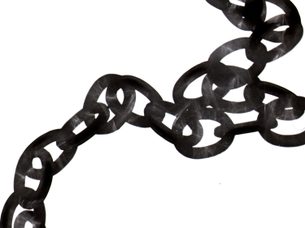
Ela Kazdal, thread, chain, bolts and tacks (2025), film still

Cáit and Éiméar McClay, just above the tear duct on each side (2025), video still
Irish-born twin sisters Cáit and Éiméar McClay are the first ever collaborative duo to receive the FLAMIN Fellowship. Beginning their joint practice in 2019, they relocated in 2024 to study on Forensic Architecture’s Masters programme at Goldsmiths, University of London. Using a combination of 3D modelling, archival research and experimental prose, their work analyses the cultural and political effects of British Imperialism in Ireland. Recent films focus on institutional and state power, such as in 2025’s just above the tear duct on each side, which unpicks records of violence and class struggle in 1950s Irish psychiatric institutions.
Exploring psychological tropes of desire, greed, disgust and shame, Vasilisa Petrova’s voyeuristic and largely improvised works critically reflect on and play with the history of cinematic form. Petrova amplifies mundane and overlooked aspects of mass culture and unsettles habitual ways of seeing by highlighting the grotesque, morally ambiguous, and conspiratorial qualities in conditions of everyday life. Her recent films include Rabbit-Dogs (2026), an oblique tale of a mad, irrational, sublime love match, and Tidal (2024), a fragile nocturnal portrait of a phone sex operator.

Vasilisa Petrova, Rabbit-Dogs (2026), video still
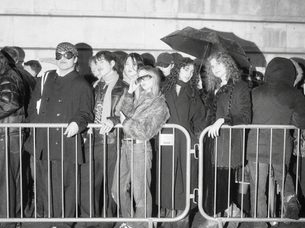
Raza Tariq, Futuh Al Ghuyub (2026), film still
Born in London in 2002, Raza Tariq began his practice filmmaking at the age of 15, producing an extensive body of work. Today, working across installation, writing, sculpture, staging and film, his conceptual practice explores transcultural ideas around the unseen, mysticism and occultation. Tariq’s current work explores connections between British Subculture, Sufism, Keyword Aesthetics and Archetypes, such as in Futuh Al Ghuyub (2026), a short film which follows a young and brazen high-end courier who is plunged London’s mystical underworld, and envisions Islamic mythological figures as present-day apparitions.