Moon and Source Code Producer talks us through the making of latest movie ‘Rogue Trooper’
Latest 1 Jul 2026News Story
“Human performances always have to be front and centre”
Stuart Fenegan, Rogue Trooper Producer, talks pop-up animation studios, avoiding AI and why Rogue Trooper had to be animation
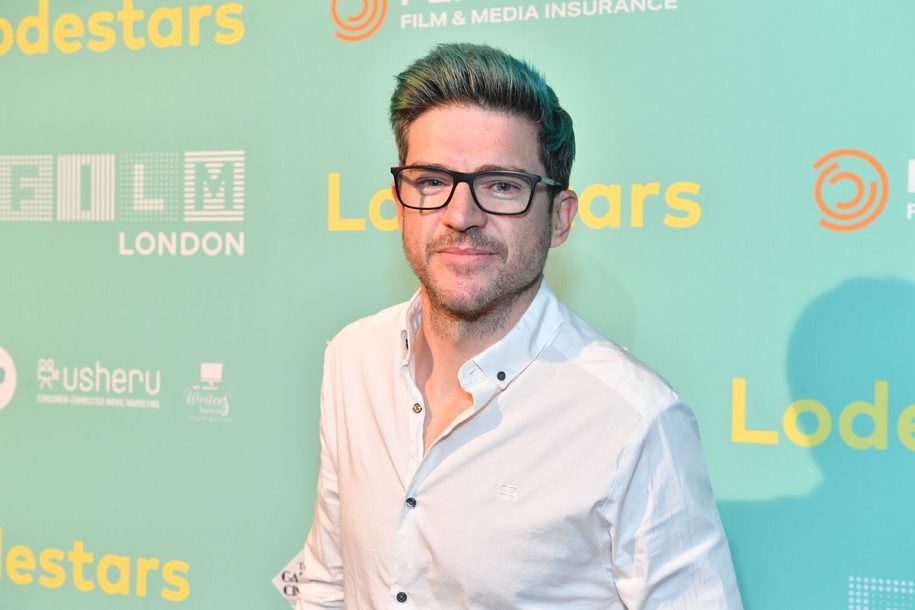
We caught up with Stuart Fenegan, one half of Liberty Films alongside director Duncan Jones, just before he headed to Annecy Film Festival, to talk about their forthcoming animated feature, Rogue Trooper (Rebellion)…
So, Stuart, you and Duncan [Jones, director] are well-known for Moon and Source Code, live action sci-fi genre films. Why did you choose animation for Rogue Trooper, as opposed to live action?
Duncan and I had wanted to explore making a full CG animation, at an indie price point, since Warcraft [their 2016 film based on the Warcraft video game]. Rogue Trooper was the perfect opportunity as we could really push the characters and capture the larger-than-life style of 2000AD in ways not possible through live action.
The intention was to use Unreal engine. Duncan wrote the script, and we worked on the script development in the traditional way. But then, Duncan voiced absolutely every character, every line! Then with that Radio play style recording we used Unreal Engine for the animatic stage, to get the whole movie down.
Basically when we started the production, we didn’t know exactly how we would make the film, but we felt confident we would figure it out as we went along. And fortunately our partners at Rebellion have the same attitude so we kind of held hands and just jumped off the cliff together!
How did you find the right partners for the project?
We were introduced to Treehouse Digital by Epic Games. While a small company, they had the same attitude as us - they hadn't done a feature before, but they were hungry and ready to jump in. If we were going to bring a $60 million animated movie in on an indie budget half the size, we needed partners who wanted to tackle it in the same way, with that indie mentality, rather than a traditional animation studio. So we worked with Treehouse on the animatic, what we call ‘level one’, before using that as the blue print for the shoot.
Did you use AI at any stage in the process?
Not at all. We always wanted the performances to be human performances, those of the actors we cast, not just bodies delivering lines.
The period I was casting the movie coincided with the SAG strikes in 2023. AI was the contentious issue and, as AI was never in our game plan, I put a voluntary clause into the Equity contract that we wouldn't use any AI in the performances.
Just seeing Matt Barry and Jermaine Clement playing Mr. Brass and Mr Bland showed how right we were. They got down their lines, but then they’d just keep riffing, staying in character and coming up with the most amazing ad libs. And that's the beauty of working with real live actors.
I think animation always needs to be driven by MO-CAP or hand animated by talented animators. Sure, we've been using green screen and comping in visual effects and filmmaking for decades. I'm curious to explore if there are efficiencies through using AI for rotoscoping and environment replacement – but that's just technology advancing, a different filmmaking tool. Human performances always have to be front and centre.
Let’s talk a bit more about the creative process. How did developing an animation differ from developing a live action film?
First, we were able to move so fast in the actual shoot! We’d cast a lot of comedy actors, so we wanted to give them the room to make the role their own. We sent them the animatic we made, saying, “this is sort of what it's going to look like. If we get this, we'll be happy, but once we've got it, we can play”. After that, we were able to shoot 16 pages a day! Absolutely crazy.
But also, all of the actors on set had Mo-Cap suits and helmet cameras. You didn't need everyone on that set to get a perfect take – Duncan would say “I can stitch take two, take four, and take six together and I'll get everything I want.” So that was how we were able to move so fast. We had a very accelerated Mo-Cap shoot, but then obviously a much longer production process at pre and post.
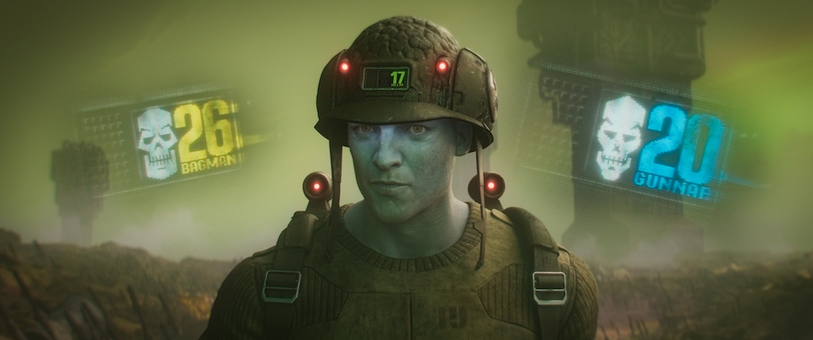
The Process…and investing in cheap lino…
Another thing we did to help move with speed: we shot ‘black box theatre’ style. In Unreal engine, we output the dimensions of all of the locations in the film, and then I spent £12,000 on really poor quality linoleum carpet! I've never spent so much money on the worst carpet ever!
We had one complete role of linoleum for every set, and the amazing Art Department marked out in white tape the entire floor plan and key props, everything. So in the morning, we could be shooting on the military base set, and then in the afternoon, or after a 20 minute turnaround, Art department could roll up the carpet, bring in another set, roll out the set plan, and then we’d start shooting again!
Let’s talk more about the animation process. You’ve been quite clear that you wanted an animation-led feel to Rogue Trooper, rather than a video games graphics. How did you achieve that?
Duncan and I are big gamers. We’d always talked about how we’d love to make a movie in the Unreal game engine. But we've all seen recognisable actors in video game cinematics, and there's that ‘Uncanny Valley’ feel.
The beauty of 2000AD’s Rogue Trooper comic book is that it's super stylised, over the top. The characters are larger than life, not just in character and mentality, but also physically and aesthetically. So we did a lot of R&D to make sure the look was unique, and felt very 2000 AD. We worked with an absolutely amazing artist, Doriana, at Treehouse.
Then we did a lot of research into bigger eyes, things like that. Once the character asset was built in Unreal, we’d tweak the proportions of the face to make it look less human, more ‘2000 AD’. And again, Duncan played around to find that aesthetic to keep us away from that ‘Uncanny Valley’ feel, while remaining true to the aesthetic we were coming from. But we were also not trying to put the comic book on the screen. We wanted it to have its own aesthetic. And that’s one of the things that we're all, Rebellion included, really proud of: it really does have its own look and feel.
You’ve said the process was far longer that you’d expected, and that you had to create your own animation studio? How did that come about?
It took us a year longer than intended. It became clear, about two years into production, that the team couldn’t achieve the final look we wanted in Unreal. So we had to create our own pipeline. And yes, I had to build a pop up animation and Visual Effects Studio in Shoreditch, the whole top floor of the building we are in.
I called up an amazing visual effects producer, Nancy Xu, (who was at MPC and then Unreal) and got her to join to help bridge that gap between where we’d got to in Unreal and visual effects. Alongside Marty Walters (VFX Supervisor), she was instrumental in finding the right talent to scale up and essentially build a VFX and animation studio from scratch in the middle of a production.
How did you find the talent?
It was at a time when the Games and VFX industries were both downsizing, so again, I picked up a lot of amazing talent. And it was a Duncan Jones 2000 AD comic book animated movie. What better carrot for talented animators than that? So the pitch was “do you want to come and work on a Duncan Jones Rogue Trooper movie for a year, and help us figure out how to do it?” And, you know, pretty much unanimously, it was like, hell yeah! So it was a really small but very tight team. We had a lot of fun. I'd absolutely love to rehire everybody and move everyone onto the next 2000AD movie.
You had the World Premiere at Annecy International Animation Film Festival last week…
Yes, the most amazing place to have premiered our film. So much love from the audience. We did a ‘Making Of’ panel there too. And now I’m deep into sales screenings and discussions.
Finally, what advice would you give aspiring producers out there today?
- Work with as many people as you can when you start out - shoot as much as you can, just get as much experience as possible, because you learn so much more by doing than by talking about it.
- When you get into features, the projects with high stakes, make sure you choose your director and your partners really carefully. Prioritise working with the right people on the right projects. You know when you know.
- Find your people. Find the people that share your references, have the same taste, and then make sure when you choose a director whose taste and vision you believe in. And because you’re a producer, you're driving the project, but it's in the service of that director's vision. So you sure as hell better believe in them and that vision!
Check out the Rogue Trooper teaser reel here: https://www.youtube.com/watch?v=byd5PRryi_Y
More details on Rogue Trooper here: https://roguetrooper.com/