News Story
Film London has a long and successful track record when it comes to serving and sustaining the capital’s screen industries. A huge part of this has been identifying and supporting new talent while elevating skills and increasing diversity.
Via the BFI's Metro London Skills Cluster (MLSC) and our Equal Access Network we’ve served as a trusted partner for household-name studios, connecting incredible below-the-line talent to hundreds of jobs across the film, TV and games industries. This job brokerage role has been bolstered by developing industry-led training initiatives for in-demand skills, and helping hundreds of talented new entrants connect with industry movers and shakers at major networking events.
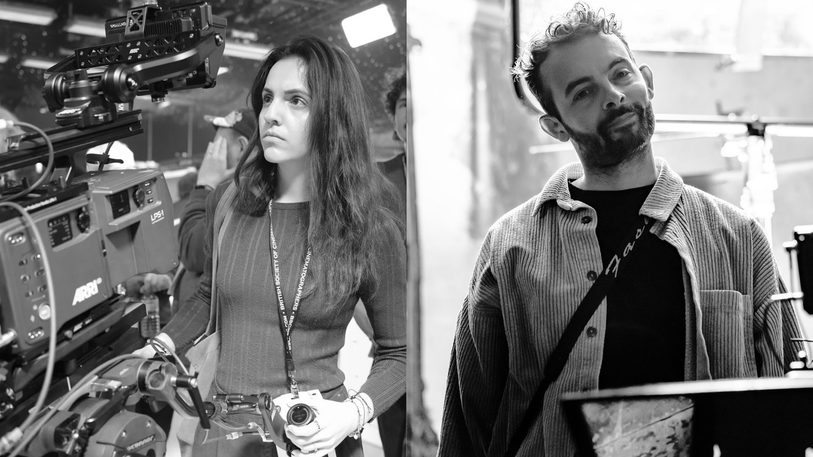
Our mentoring scheme, Film London Connect, also serves as a key means of support. By matching new and emerging talent to best-in-the-biz mentors, we aim to help people develop their careers and build practical industry knowledge. Here we talk to cinematography mentee Sofia Soto and mentor Felix Schmilinsky about the experiences as part of Film London Connect.
Mentee: Sofia Soto
Sofia started her film career as an assistant editor and AC while was working for Raindance Film Festival and Raindance Film School, where she edited showreels, trailers and social media content. Currently a freelancer, she mainly works as in the camera department on short- and long-form and commercials, and recently started working as a spark trainee on short films, and has worked on dailies for a high-end TV series. Her go-to movies are Coraline, Back to the Future and La Haine.
Mentor: Felix Schmilinsky
Now a successful Director of Photography for narrative films, documentaries and commercials, Felix started his career in Munich as a production assistant during the final stages of post-production on a low-budget feature film. His next role was as a runner for a company making high-end commercials – a very different role, involving very different budgets! Today he spends his working life in constant bounce-back communication between directors, producers and his technical crew. His go-to movies are City of God and Heat.
What drew you to a career in film and TV, and why cinematography in particular?
Sofia: I have always been drawn to what goes on behind the scenes when making a film or a TV show. I find cinematography to be a beautiful medium for creativity and expression that allows for millions of possibilities when trying to convey feelings and emotions. It amazes me how powerful visual storytelling can be: through composition, lighting and camera movement, you get to convey the story while immersing the audience. I see the combination of camera and lighting as powerful tools I can use to capture impactful, meaningful imagery that I hope evokes something in the audience that stays with them long after watching.
What do you love about cinematography?
Sofia: I love its collaborative aspect and its dynamism. Every shoot is different, each bringing its own challenges and special moments, but also, there is usually not a day on set that feels repetitive, especially when you’re shooting in different locations. I also love that you are always working with new people from whom you can learn a lot, given everyone’s different experiences and knowledge.
Felix: I really enjoy getting to know new people on every job. Also, the places you get to work in can make it feel very special. The ever-changing challenges of each new project provide great variety. The work simply doesn’t become boring.
What kind of challenges did you find when it came to breaking into the industry?
Sofia: A challenge I faced was that, as some people have been working in the industry for longer, they already have a pool of people they can rely on and call when they need someone. At first, it’s all about proving yourself and proving to others that, although you might not have that much experience, you are reliable and able to do the job. Another challenge in this industry is that there is not a single path to reach the career path you want. Everyone has a different journey, and there are so many ways to go about it, which can seem overwhelming when you are just getting started. It can also be hard if you compare yourself to other people, but it is important to remember that everyone has a different journey.
Felix: When I realised I wanted to work in film (I was about 17), I had never met anybody who was actually a filmmaker or connected to the industry. It felt very remote and unattainable, and I worried I might end up as a poor, starving artist.
Breaking into the industry felt like a chicken-and-egg situation: I applied for office runner positions at production companies, but they all wanted candidates with previous experience – even though the job only paid minimum wage and there was no lower rung to start from.
At the interview stage, I stood out because I was a bit of a computer geek: I had taught myself Photoshop editing software and knew how to fix stuff. In the end, though, the real reason I got my first job was more unexpected: the boss had been an old-school breakdancer and loved that I DJ’d hip-hop and funk music on vinyl.
How did you find out about the Film London mentorship programme, and why did you decide to get involved?
Felix: A friend had taken part in the programme prior to me and put me forward as a suitable mentor. I leapt at the opportunity because I want to share my knowledge and I see it as an enriching experience, having to reflect on my own career choices before potentially giving a young person ill advice.
How would you sum up the mentor-mentee experience to someone who is considering it? What can they expect, and what do you have to put into it yourself to get the most out of it?
Felix: The mentorship starts with a simple video call in which you can get to know your mentee. I went into it with a mindset of wanting to be open and of service to someone coming in with a lot of questions. As we talked, I began discovering more topics I felt I had to share my experience about. Making first steps in a freelance working world can be a minefield and I wish I would have had some guidance myself at the start of it all.
Sofia: It is a great experience that requires communication and commitment from both mentor and mentee. You arrange meetings with your mentor, usually one per month, to discuss one of your goals, topics, or any concerns you have about your career, experiences, or projects you are currently working on. For me, working in cinematography, I would have feedback meetings with my mentor where I would show him any pre-production work I had done, if I had any projects I was going to shoot, but we would also talk about what it is like working as a freelancer, or any cinematography topics I wanted to explore.
You can expect a lot of support and insights into your career and department, meeting new people and making new connections your mentor has access to and (I think the most important thing for me), building a beautiful connection and friendship with your mentor.
To make the most of it, you need to be proactive with how you use your mentor’s feedback, advice, and tips. You will learn the most by applying these to your work, to any challenges you face, and to how you approach the industry.
Which have been the most important lessons you’ve learned as a mentee? How have you put them into action?
Sofia: One of the most important lessons I have learned as a mentee is becoming more confident in communicating my ideas and thoughts while working on a project. I learn to trust my creativity and my intuition, and to stand up for myself and my crew whenever things are not fair.
Creatively, I learnt how important it is to remain open to new ideas and experimentation when working on a set. Through this mentorship, I became aware that you cannot control and plan for everything, but the best ideas may come from being innovative with what you encounter.
What was it liking working together on set as part of the mentorship scheme?
Sofia: It was really inspiring and motivating as Felix is someone I look up to. Seeing how he thrives on set, working alongside the camera and lighting crew was insightful and taught me a lot. It was great to see his visuals come alive and how he applies many of the concepts we discussed throughout the mentorship.
Felix: It was great to see Sofia working so well within the camera department and with the wider production crew. Success in the film industry is so reliant on building and maintaining relationships, and I believe Sofia has a great path ahead.
Have you learned anything by becoming a mentor?
Felix: The main takeaway from mentoring Sofia was that I was reminded again of the fact that things take time, and persistence is key – especially in a period of a descending economy, there might not be as many opportunities. The stage Sofia is in can be very exciting because there is lots to learn but also quite disconcerting when there is a lack of financial stability. Those who don’t lose sight of their goal and build a safety net around them can push through the hard times.
Where do you hope your career takes you?
Sofia: I hope my career leads me to become a renowned cinematographer and camera operator, working on diverse projects that allow me to create impactful and inspiring visuals and stories.
I also aspire to positively impact the industry, becoming recognised for my dedication, memorable visuals and creativity while paving the way for young female filmmakers.