News Story
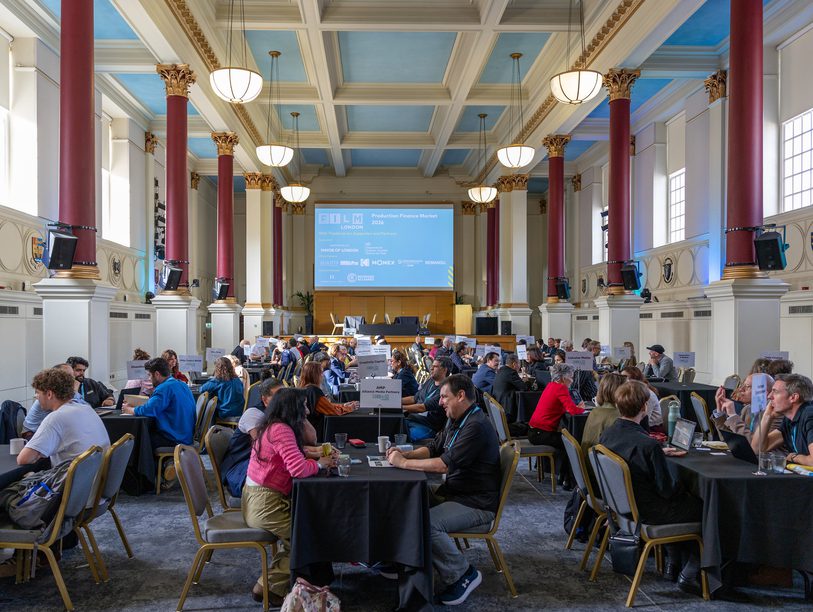
The Film London Production Market opened yesterday, with a keynote from Stephen Kelliher, MD and co-founder of Bankside Films.
Now in its 20th year, the market connects ideas with finance to help get films made, with 105 producers/filmmakers and 65 financiers from all over the world gathering for an intense two days of speed dating-style meetings in central London.
There are three parts to this year’s expanded market. The main Production Finance Market presents international film projects from established filmmakers, the New Talent Strand spotlights exciting features from emerging voices, and IP market Upstream presents original ideas from a range of disciplines up for screen adaptation.
PFM is all about bringing people together and building connections. “For us, PFM is about figuring out where projects overlap and where they differ,” explains Roeland Oude Nijhuis, National Film Commissioner for the Netherlands, and returning to the market for the third time. “Last year, we found a solution for an American film looking for a boat and a body of water – sometimes you don’t figure that out by just reading film profiles and synopses, but you do find it out in conversations.”
For BAFTA Breakthrough Producer Alderney Middleton, being selected for the New Talent Strand is already reaping rewards, “It’s been a brilliant experience of preparation, learning from industry leaders and networking with film industry professionals, both new and experienced,” she says, “Being a part of it is already a game changer, I'm excited to see where the market takes us.”
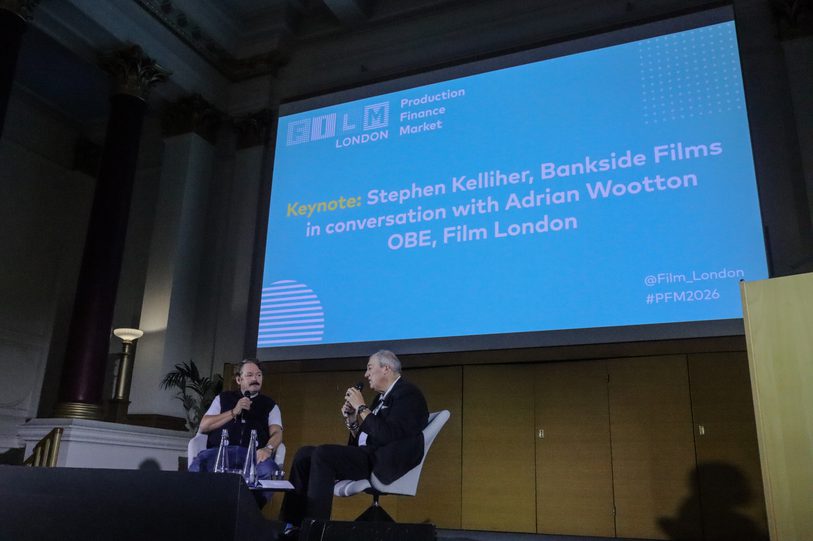
Stephen Kelliher: Keynote
Ahead of the market’s main meetings, the event opened with a keynote from Stephen Kelliher, in conversation with Film London CEO Adrian Wootton OBE.
At the sharp end of international film financing and sales, Stephen covered a lot of ground – his accidental start in film to co-founding Bankside, the proliferation of sales companies and evolution of his role, working with debut talent, and the changing nature of festivals and markets. More highlights include the importance of theatrical distribution, and the time it takes to get funding in place, with insights from the success of I Swear and The Ballard of Wallace Island, as well as Ashley Walter’s upcoming prison drama Animol.
Key takeaways
Stephen sees his role as a sales agent as part of the creative team, often working as an exec producer to help raise finance and get projects greenlit, and always walking the line between films that will work for the market, and which feel fresh and different.
This approach underpins Bankside’s reputation for working with debut talent. “An awful lot of our films are debuts – and we’ve had a lot of success in doing so. It excites us, finding new talent and unveiling them to the world,” he explains, while also saying that being so early in the filmmaking process helps to avoid high-stakes bidding wars further down the line.
He acknowledges this a challenging moment for the industry but is not pessimistic, “It does seem to correct itself,” he says. Streaming hasn’t revolutionised distribution in the way expected so for Bankside, films need to be theatrical to be a success and appeal to an international market (conversely, 90% of US companies won’t acquire non-English language films). But with a low UK distributor-to-film ratio, projects often lack a viable route to market – Bankside takes on around 10-12 films a year but gets submissions in the thousands. “There’s a lot to wade through to find the gems that have the potential to work – you need to give people a reason to go to the cinema and go and buy a ticket.”
His advice for emergent producers looking for a sales agent? Be prepared – you’ve only got one shot, so be confident that what you’re putting in front of people is the best it can be at that stage, and look at the track record of the company – have you got common ground or shared taste? Films also need to work in the cinema, “Do we see audiences getting up off the sofa and going to see it? Is there something unique about it? Is it telling a story we haven’t seen before or is it telling a story that we have seen before but differently?”
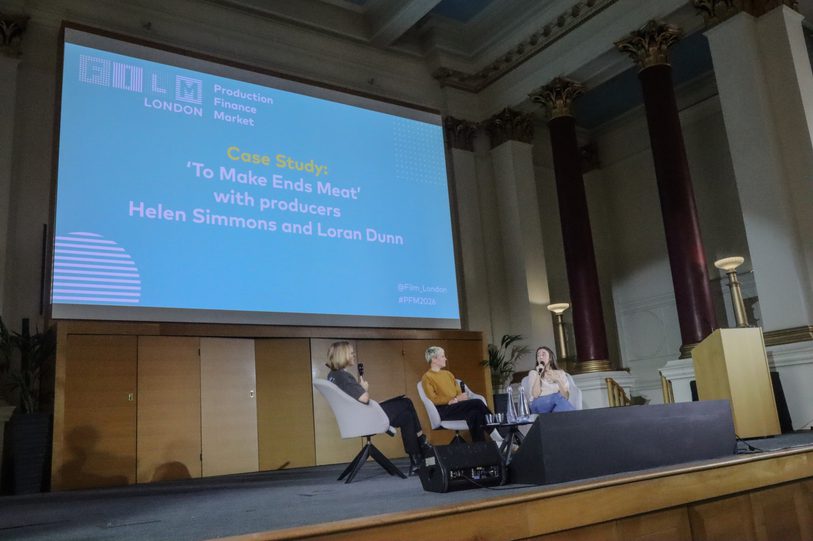
Case Study: To Make Ends Meat
Next up, delegates heard from producers Helen Simmons and Loran Dunn. Having worked with the filmmaker Luna Carmoon on her first feature Hoard, the producers shared the development and financing journey for Luna’s upcoming horror, To Make Ends Meat.
The session covered subjects such as selling the magic of a film to investors and the constant problem-solving of being a producer – how to make your film for less, their scramble to raise 300-350k in 48 hours, and the complexities of trying to deliver an ambitious film without the budget. They also spoke about navigating the feedback process, having conviction in your project, and the importance of being aligned as a team.
More about PFM
The market wraps today, following a day and a half of meetings, alongside IP market Upstream, – you can find out more about the latter by subscribing to the monthly Upstream Substack.
The Film London Production Finance Market is funded and supported by the Mayor of London and the Department for Business, Innovation, Science and Trade (DBIST).
The 2026 edition of the PFM continues its international partnerships with Tallinn Black Nights, EAVE, MIFF 37ºSouth, Ontario Creates, HessenFilm & Medien, The National Film and Video Foundation South Africa, Screen Ireland, The Netherlands Film Fund, and Ffilm Cymru, S4C, and Creative Wales’ Sinema Cymru programme. For 2026, a new partnership has been established with The Infocomm Media Development Authority (IMDA) in Singapore.