Jasleen Kaur
Pressed Lives
Sometimes I feel people’s lives press up against mine, like two thin paper maps on top of one another. There is a desire for relation — I see you; do you see me? 1 When Alia is listening, it is like her fingers are pressing down on the map, to try and see what lines up and what doesn’t.
Right………right………hmmm………yeah, are the sounds she makes. I know this kind of listening. Alia understands the worth of an oral history beyond its relationship to an institution, an archive, a gallery.
She is obsessed with her subjects — the interviewees and the place. Committedly she makes trips to Glasgow with her camera and recorder from 2022 to 2025, sometimes via Swansea after care responsibilities. Despite leaving Scotland and building her life elsewhere, she keeps being called back. I know this pilgrimage. It is an attempt to reencounter your past differently.
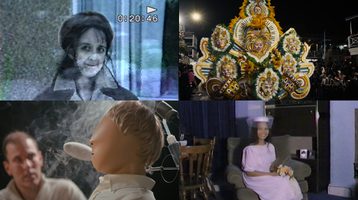
Alia Syed, The Dhaba - 1st Chapter: Mr Sharif and 2nd Chapter: Mr Bhari (2025), film still.
Heartbreak
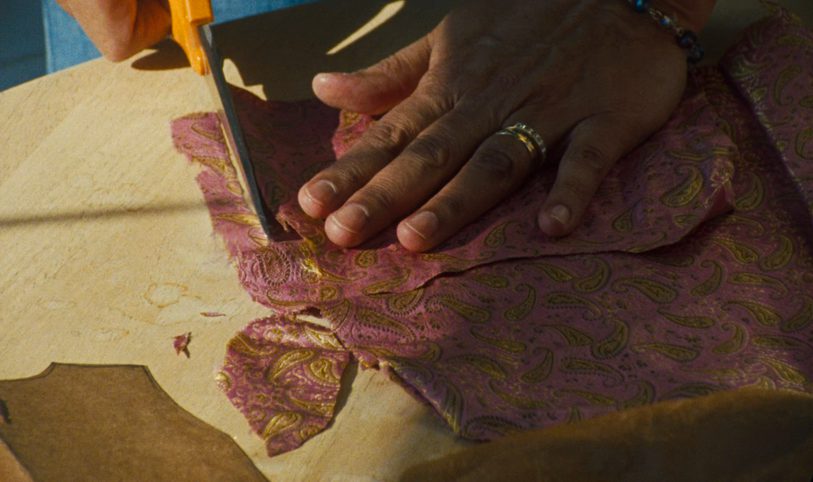
As per her instructions, I place several devices on my studio desk and play Kabaddi, The Dhaba, Nasreen and Rubina all at the same time to try and recreate the sensation of being in her installation. Memories flicker on the screens. A rare sunlit day casts beautifully on the loose brown skin of hands, thick sweet fried air, a ghazal carries on the wind.
Everything about Alia’s films hurts.
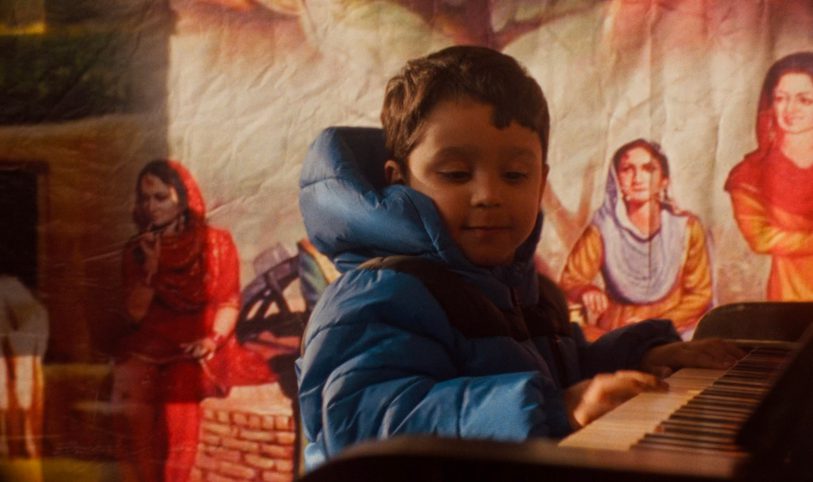
I recognise the voice immediately. Where the tongue hits the palate, how the voice has changed from speaking at home to speaking in public, the laugh instead of the cry, the grammatical errors, the seamless slip from Glaswegian to Punjabi. In just a few words, I can register a lifetime of code switching and survival mechanisms. I miss these voices of mine, not having access to them. This is heartbreak.
The first film I saw of Alia’s was Fatima’s Letter (1992). I don’t remember who I was then, but I remember the film clearly. I remember that it was the intentionally mismatched translation in what we were reading and hearing that made me feel as if I was being trusted with a secret code, garnered not from film school, but from living rooms. Watching Bollywood movies each evening meant I could understand Hindi, which meant I could understand Urdu, which meant — I was in. Alia messed about with the rules of filmmaking to switch the dynamic of power between the viewers, which would immediately switch back outside of the screening room. For 21 minutes, Alia created a hidden connection between the people onscreen and the viewers who recognised this deviation from the rules of language.
Alia Syed, The Dhaba - 1st Chapter: Mr Sharif and 2nd Chapter: Mr Bhari (2025), film still.
Who Brought You? 2
Paisley Marriage Suite, June 2026. In a registry office with veneered walls, a framed photo of King Charles III, a mahogany desk and flowers to suit births, deaths and marriages, we attend my mum’s Citizenship Ceremony. She is now 66 years old, having spent 59 years living and (still) labouring in this grey country. In this soft facade of the Home Office, we sit among rows of soon-to-be British citizens, alongside their family and friends.
The occasion is marked by a feeling of ambivalence, as I observe a series of absurdities:
1. My child and I, both British citizens, are witnessing my mum’s
naturalisation to Britain.
2. If my mum speaks a sequence of words at the right time in the right place, in the eyes of the law, she will, as if by magic, become British.
3. The registrar has left-leaning views. She labours the point that good citizens give back to their new communities. Her tone sobers as she acknowledges the rise in anti-migrant violence in Scotland, and reiterates, somewhat hopelessly, that these sentiments are the views of a minority.
The cordial tone in the room and promise of mobility are cut by a nauseating feeling of stasis. I am reminded of the tension in Kabaddi — of Alia drawing our attention to bodies jostling on a gym floor marked with lines like borders drawn on a map, which denote the rules to this game. That you have to be in the right place at the right time and say the right thing.
Within a few weeks of the ceremony, several racially motivated attacks unfold in Glasgow. The UK Home Office Immigration Compliance and Enforcement team raids Pakistani Street Food in the Southside, a longstanding South Asian neighbourhood. A Muslim woman has her hijab ripped from her head and she is struck with a bottle. Muhammad Jawad Yaqoob, a Deliveroo driver, is attacked by members of the Unite the Clans far-right rally. Quorum Beg is accused, while at his local park with his family, of inappropriately filming children. Daniel Murray chases down people on Maxwell Road with a pickaxe.
I receive these news stories from my bed via the Instagram feed of Tabassum Niamat, a community organiser in the Southside, and uncoincidentally the daughter of Mr. Sharif who appears in Alia’s film The Dhaba. Her politicisation is informed by the racism experienced by first-generation diaspora in Glasgow, which has predictably (but nonetheless disturbingly) cycled back around. Two months earlier on the same screen, same bed, same Tabassum, I watch Everybody to Kenmure Street 3, a documentary about the local residents who spontaneously mobilised to halt a dawn immigration raid, which callously took place on Eid in 2021. The galvanising force of neighbours protesting against ICE-style raids feels like yesterday. The attacks feel like the 1980s.
Alia Syed, The Dhaba - 1st Chapter: Mr Sharif and 2nd Chapter: Mr Bhari (2025), film still.
Feeling the car4
“my dad actually believed that the driver of the car was driving
over the cats eyes and breaking them and that the next morning
someone would come along and replace them”5
Over the years, I have nicked a small number of photographs from albums of multiple generations of family members posing in groups beside cars. Sometimes the cars belong to us, often not. There is one image taken in the Southside, where my mum and her siblings are cropped out of the image, centring the British Leyland Triumph 1300, brown with a white-and-mustard racing stripe down the bonnet. My maternal grandad, like Mr. Sharif and Mr. Bhari, drove buses for a time in Glasgow. He also experienced racism from the driver’s seat — the price you’d pay for a job with a small heater. 4000 odd miles away in Delhi, my paternal grandad worked at a British car factory, eventually dying from a heart attack on the factory floor just before his son arrived to deliver his daily lunch. British imperialism dismantled Indian vehicle manufacturing by passing parliamentary acts, banning Indian workshops from designing and making transportation. Thousands of British trains and cars were simultaneously imported into India, effectively killing off the old technical knowledge which eviscerated local industry.
My family’s desire for cars and all they symbolised — freedom, status, euphoria — continued as I got older. An object that distinguished dreamers from labourers, evidence you’d worked hard enough to have the thrill of owning a machine that moved you and your family around a place. On Saturday evenings, I would hand wash the car with my brother while listening to music, loud from the sound system in the garage which the neighbours despised. This would take at least two indulgent hours (or four albums). My task was to clean the intricate alloy wheels with a sulphurous-smelling wheel cleaner and a splayed pastry brush.
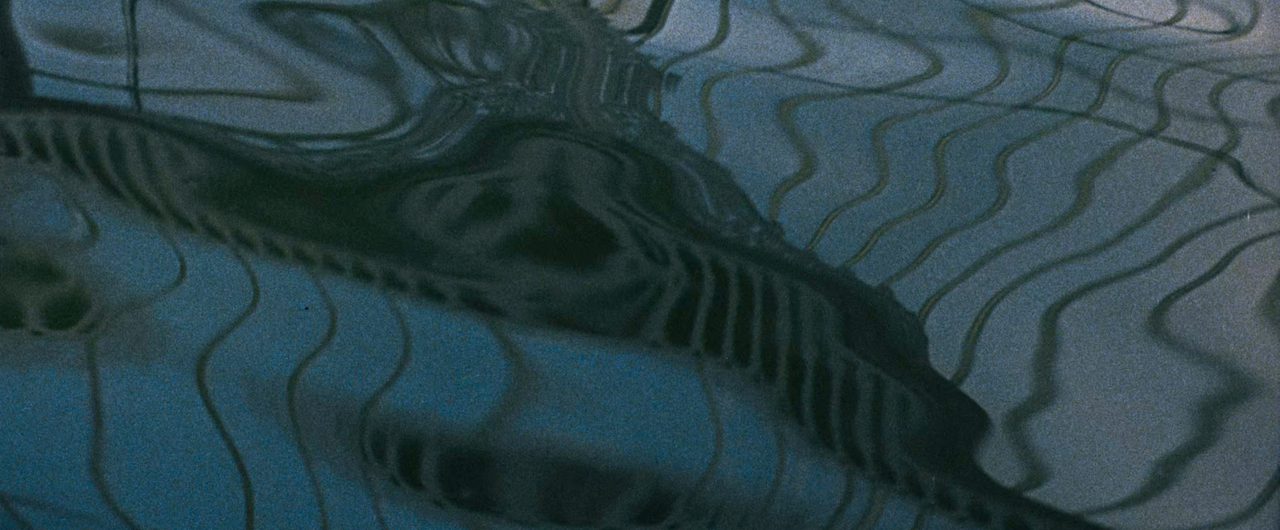
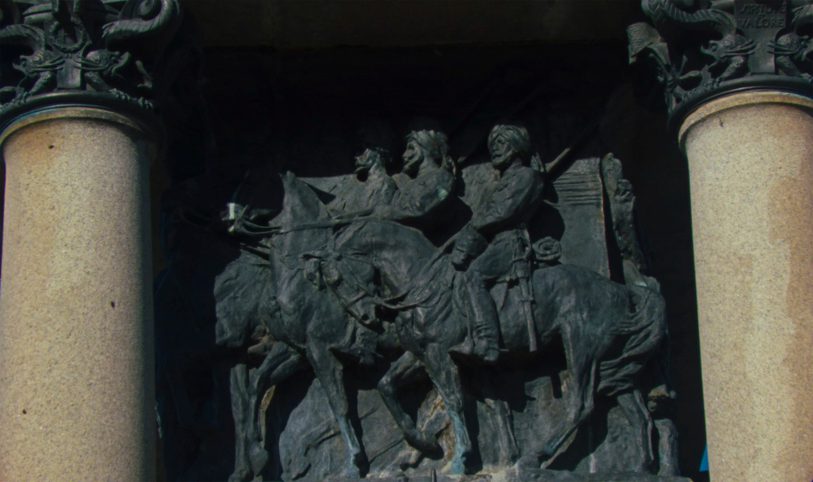
I know this place so well that I can recognise it by night. I know the roads Alia is filming — I know the feeling of the tarmac under the wheels, the rhythm of the motorway lighting system passing overhead and cats eyes below. A therapist once told me that I struggle with episodic memory, but what I can recall is the feel of the light at the time, or the smell. I’ve been thinking about how memories live in infrastructure — in the reinforced concrete girders of Kingston Bridge, in the number 4 bus route, in asphalt. Alia’s viewfinder rejects identifiers; like me, she is concerned with sensation. We never see anyone speak or even the room they are in, but that’s okay because their voice is the place, and the place is their voice. They are the juddering sewing machine. The carved granite statue. A rippling building in the water, impossible.
1 Spoken by Mason Leaver-Yap in a zoom call about this text.
2The Dhaba, from Alia Syed, The Ring in the Fish (2025).
3 Felipe Bustos Sierra (dir.), Everybody to Kenmure Street (2026).
4 Mimi Sheller, ‘Automotive Emotions: Feeling the Car’, Theory, culture & society, 21:4-5 (2004), pp.221-224.
5 The Dhaba, from Alia Syed, The Ring in the Fish (2025).
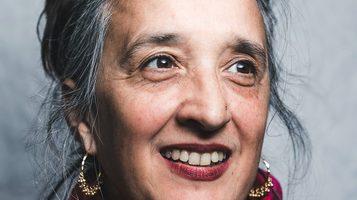
Jasleen Kaur (b. 1986, Pollokshields, Glasgow) lives and works in London, UK. Her work explores cultural memory and political belonging. She makes with the slurry of life, interested in the social histories contained within the material things that surround us. In her practice, mass-produced, everyday objects are coded with symbols and images, questioning how the narratives we inherit circulate in discreet ways and, in turn, shape us.