Jarman Award 2026 tour
The Film London Jarman Award 2026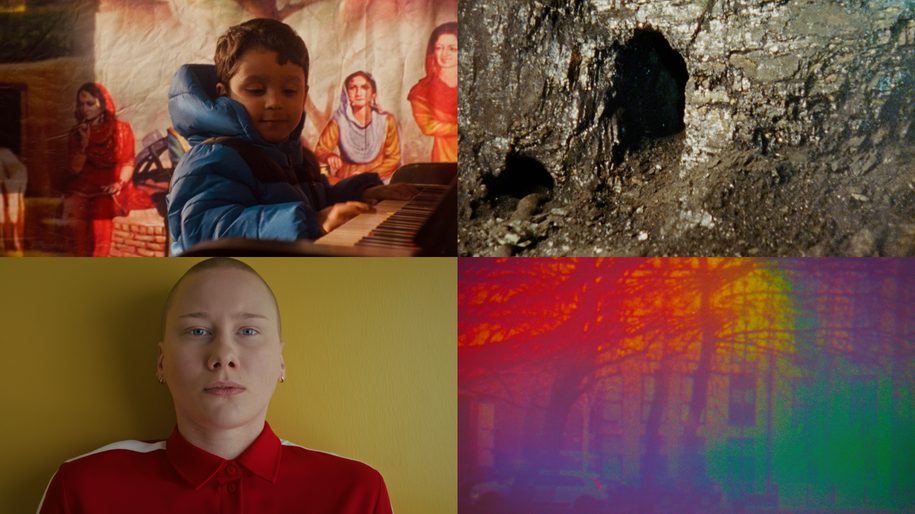
Film stills by artists shortlisted for the Jarman Award 2026. Top left to bottom right: Alia Syed, Sadia Pineda Hameed, Ilona Sagar, Rhea Storr
This year’s Film London Jarman Award tour will see the best in contemporary artists’ filmmaking taken to venues across the UK from 22 September 2026 – 21 January 2027. The tour will offer audiences the chance to explore an extraordinary range of boundary pushing work by the four artists shortlisted for the prestigious £10,000 prize: Sadia Pineda Hameed, Ilona Sagar, Rhea Storr andAlia Syed.
A shortlisted artist will be in conversation at each screening of the 2026 tour, which will visit nine venues across the UK, including major galleries, arthouse cinemas and artist-run spaces.
A month-long exhibition of the shortlisted artists' films will take place at Whitechapel Gallery, London, from 17 November – 13 December 2026.
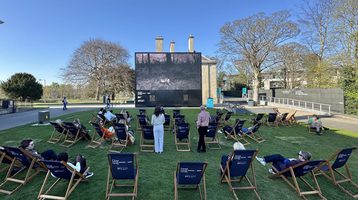
The recipient of the 2026 Jarman Award will be announced on 24 November 2026, after which their work will show at Irish Museum of Modern Art (IMMA), Dublin, on their Living Canvas monumental digital outdoor art screen, from 7–21 January 2027.
Jarman Award 2026 tour events
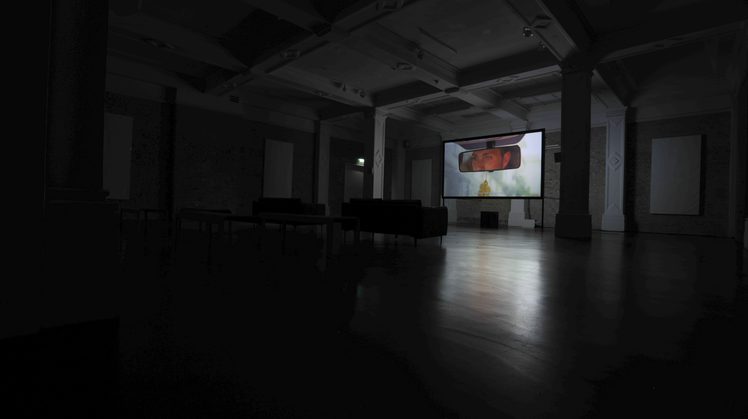


Films in the Jarman Award 2026 touring programme
- Rhea Storr, Okay Keskidee! Let Me See Inside (2025), 20 mins
- Alia Syed, The Dhaba - 1st Chapter: Mr Sharif and 2nd Chapter: Mr Bhari (2025), 30 mins
- Sadia Pineda Hameed, Moving Sound (2025), 8 mins
- Ilona Sagar, Other Actors (2025), 60 mins
The work of the artists shortlisted for this year’s Film London Jarman Award is brave, poetic and uniquely experimental in its approach. Storytelling, family relationships and oral histories intertwine with home movies, archival footage and abstract images in works that explore migration, identity, and intergenerational trauma.
About the films
Rhea Storr, Okay Keskidee! Let Me See Inside (2025)
Okay Keskidee! Let Me See Inside is a personal account of Black community spaces in the UK, focusing on Caribbean diaspora. By visiting the site of the former Keskidee Centre (a Black arts centre in Islington, London) that is now luxury apartments, the film considers the conditions which allowed this historical space to thrive. Okay Keskidee explores the economic and social reasons which have made gathering in physical space difficult, showing that histories of arts organising go hand in hand with political discourse. Made using optical printing and rostrum cameras, the work uses analogue film processes to address slow ways of thinking around contemporary subjects. Considering the personal connections formed in using these now-obsolete techniques, the film asks whether the digital realm can replace a physical community presence and produce an accessible archive for a new generation.
Sadia Pineda Hameed, Moving Sound (2025)
Moving Sound is a speculative work set across 1980s and near-future Wales, shot on super 16mm film. In the film, sounds of present-day anti-colonial and anti-capitalist strategies for mining strikes are transmitted from ecological sound collective Soundcamp's streamboxes to the past via an underground, time-travelling broadcast. In the 1980s, workers build DIY receivers from Moving Sound portable audio devices, which they use to distribute the broadcast around sites of production and the everyday. Moving Sound blurs fictional 16mm and archival 8mm footage into covert sonic action, exploring how organising converges and enacts across geographies, temporality, fantasy and reality.
Alia Syed, The Dhaba - 1st Chapter: Mr Sharif and 2nd Chapter: Mr Bhari (2025)
The Dhaba (roadside Cafe) is a poetic chronicle documenting the migration of two men to Glasgow. Arriving at different historic moments from the Indian subcontinent, their testimonies shed light on the effects of ever-changing British immigration legislation; the lived experience of the interviewees revealing the systematic obfuscations of colonialism and on-going racism.
The Dhaba is part of Syed’s larger The Ring in the Fish project, commissioned by CCA, Glasgow, which encompasses 16mm vignettes, photographs and audio interviews. The Ring in the Fish draws inspiration from the tale of St. Mungo—patron saint and founder of Glasgow—and the story of the fish and the ring, the title becoming a conduit for the transformative nature of both individual and collective narratives inviting an intimate exploration of journeys, separation, memory, and identity. The Dhaba veers away from traditional documentary forms, centring memory and the role imagination holds in migration. The work counterpoints workplace rhythms of communal kitchen work and the concentrated isolation of domestic piece work, with an equestrian statue of Lord Roberts, celebrating his role in putting down what the British call The Indian Mutiny and what Indians refer to as The First War of Independence in 1858, highlighting Syed's interest in architectures of the built environment, as a vessel for both personal and public memorialisation.
Ilona Sagar, Other Actors (2025)
Other Actors explores the links between bodies and buildings, health and architecture through the lens of Paimio Sanatorium Finland. Designed by Alvar and Aino Aalto and completed between 1929 and 1933, the sanatorium represents a radical shift in design for health. Conceived as an "instrument for healing" the Aaltos' proposed an architecture designed not for the verticality of the healthy body but for the horizontal perspective of the sick. At the time of filming, the sanatorium is at a significant moment in its transition from hospital to a new purpose. As restoration progresses, the film examines its status as a building in flux. The film was made in close collaboration with those who have lived and worked in Paimio Sanatorium, including former maintenance staff, workers at the furniture manufacturer Artek, and surviving architects of the Aaltos' design team, alongside theorists Beatriz Colomina, Heini Hakosalo, and Peter Stadius. Through the film, Sagar asks us to consider what we do with the architectural legacies of modernism that linger in our cultural imaginary, and how we can platform those hidden behind its visual facades.
About the artists
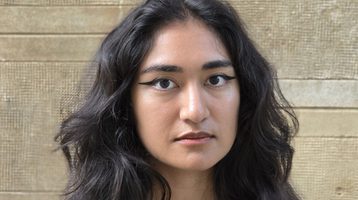
Sadia Pineda Hameed is a Filipina Pakistani artist based in the Ebbw Valley, Wales, whose work explores ways to speak about collective and intergenerational trauma through anticolonial strategies of dreaming, telepathic communion and secrets. Using 16mm film and hi8 video, sculptural installation, text and performance, her work imagines what future tools for resistance, value and communication springing from these strategies might look like. Her practice is led by a processes of associative journeying in resistance to western historicisation and displacement; mythmaking, melodrama and decoy become playful devices to speak through a ‘delirious discourse’ where personal archives and collective experiences converge. She has shown with Iniva, Brent Biennial 2022, The Crypt Gallery and The Mosaic Rooms in London; The Bluecoat, Liverpool; The Box, Plymouth; Nottingham Contemporary, Nottingham; Catalyst Arts, Belfast; Tangent Projects, Barcelona; Zamek, Poznan; Mostyn, Llandudno; Glynn Vivian, Swansea; Chapter Arts Centre, g39 and Arcade/Campfa, Cardiff, amongst others. She was awarded the Wilhelmina Barns-Graham Porthmeor Studio Residency 2026, Arts Council Wales Perspectives Fellowship 2024, British School at Rome Fellowship 2023, Freelands Fellowship 2022, Jerwood UNIT(e) Residency 2021 and the Paul Hamlyn Award for Visual Artists in 2021. Her films have been selected for Alchemy Film and Moving Image Festival 2026, Wales One World Film Festival 2026, FOCUS Wales 2026 and Queer East Film Festival 2025.
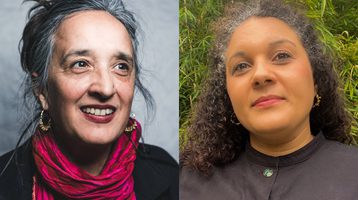
Ilona Sagar is a London-based artist and filmmaker, and resident of Somerset House Studios. Drawing on archival research and interdisciplinary collaboration, her work explores how civic and social identities are constructed and contested through the infrastructures of health, technology, and the body. Recent projects include Other Actors (Stanley Picker Fellowship, 2025), currently touring to the Architecture and Design Museum Helsinki, Nordic House Reykjavík and Röhsska Museum Gothenburg. Her work has been presented internationally in venues including the 24th International Exhibition at Triennale Milano, Serpentine Gallery, Barbican Art Gallery, Hayward Gallery, Wellcome Collection, CCA Glasgow, Villa Arson Centre National d'Art Contemporain and Art Rotterdam. In 2027, she will undertake a collaborative research project with neurologists at King's College London and the University of Eastern Finland in partnership with Saastamoinen Foundation. Forthcoming work includes projects with Cement Fields and a solo commission with public programme at Somerset House Studios.
Rhea Storr makes films that consider Black, mixed-race and diaspora cultures, including her own Bahamian-British ethnicity. She explores the in-between, translation, format and aesthetics, that depict themes such as masquerade, the performances of Black women, community space, and racialised subjects in rural or public landscapes. She has a long-standing interest in the counter-cultural use of analogue film, embracing DIY practices and alternative spaces in order to depict Caribbean subjects who are themselves also marginalised. Storr was educated at Oxford University, RCA and Goldsmiths, University of London where she completed her doctorate. Her research explores the intersection of Black identities and experimental filmmaking practices. Recent screenings and exhibitions include: MoMA Doc Fortnight; New York Film Festival; BFI London Film Festival; Berwick Film and Media Artist Festival; European Media Art Festival; Kassel Doc Fest and Videonale, Kunstmuseum Bonn. Exhibitions include - Artist Film International, Whitechapel Gallery; Bangkok Kunsthalle; Tate Lates; Somerset House; Lisson Gallery; National Museum for African American History and Culture, Washington D.C.; Arkansas Museum of Fine Arts; VIAD and Brown University and CIRCAxDAZED London, FotoMuseum. She is the winner of the Aesthetica Art Prize 2020, the inaugural Louis Le Prince Experimental Film Prize, the Royal Photographic Society Award for Creativity Contribution to Art in Moving Image 2023, the Kodak Award at Hamburg International Film Festival 2025 and runner up Best British Short at London Short Film Festival 2025. Rhea Storr’s New Territories (spectacle is king) is screening at the Barbican on August 16th, as part of the exhibition and film season Project A Black Planet.
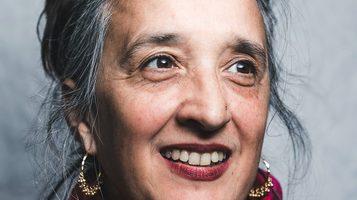
Alia Syed was born in Swansea, and works between London and Glasgow. For over 40 years, she has made experimental films that disrupt traditional narrative structures to create complex explorations of migration and colonialism, identity and place. Her work navigates geography, memory, and the fragmented nature of diasporic identity. Syed’s films have been shown at numerous institutions around the world including, BBC Arts Online (currently), Tigers an Dragons: India and Wales in Britain (currently) Glynn Vivian; CCA Glasgow (2025); Whitechapel Gallery, London (2023); Courtisane Festival, Belgium (2019); WKV, Stuttgart (2019); Yale Centre for British Art (2019); Los Angeles County Museum of Art (2012-13), 5th Moscow Biennale (2013); Museum of Modern Art, New York (2010); Museo National Centro de Arte Reina Sofia, Madrid (2009); XV Sydney Biennale (2006); Hayward Gallery, London (2005); Tate Britain, London (2003); Glasgow Museum of Modern Art, Scotland (2002); Iniva, London (2002); The New Art Gallery in Walsall (2002); and Tate Modern, London (2000). Syed’s films have also been the subject of several solo exhibitions at Talwar Gallery in New York and New Delhi. She was nominated for the Film London Jarman Award in 2015 and the Paul Hamlyn Award for Artists in 2020.